Les moteurs hydrauliques – the hydraulic engine

The bucket wheel powered the paper machine up until 1981. The wheel also provided electricity for the mill up to 1952.

La turbine – the turbine

The turbine was installed in 1920 to replace two bucket wheels. Originally the same waterfall drove three wheels. The water coming from the river Dure is diverted and falls onto drive blades at the bottom of the tank. The blades drive the axle and the machines above. The speed depends on the rate of flow of the water.

Vitrine filigrane – watermark showcase

Paper has been made at Brousses since the end of the seventeenth century. The first paper maker was Polère. Why make paper at Brousses ? Carcassonne became one of the great industrial towns in the French Kingdom – manufacture of woollen cloth employed 15 000 people. The Royal Cloth Works exported this high quality material throughout Europe and used paper and cardboard to wrap it up.

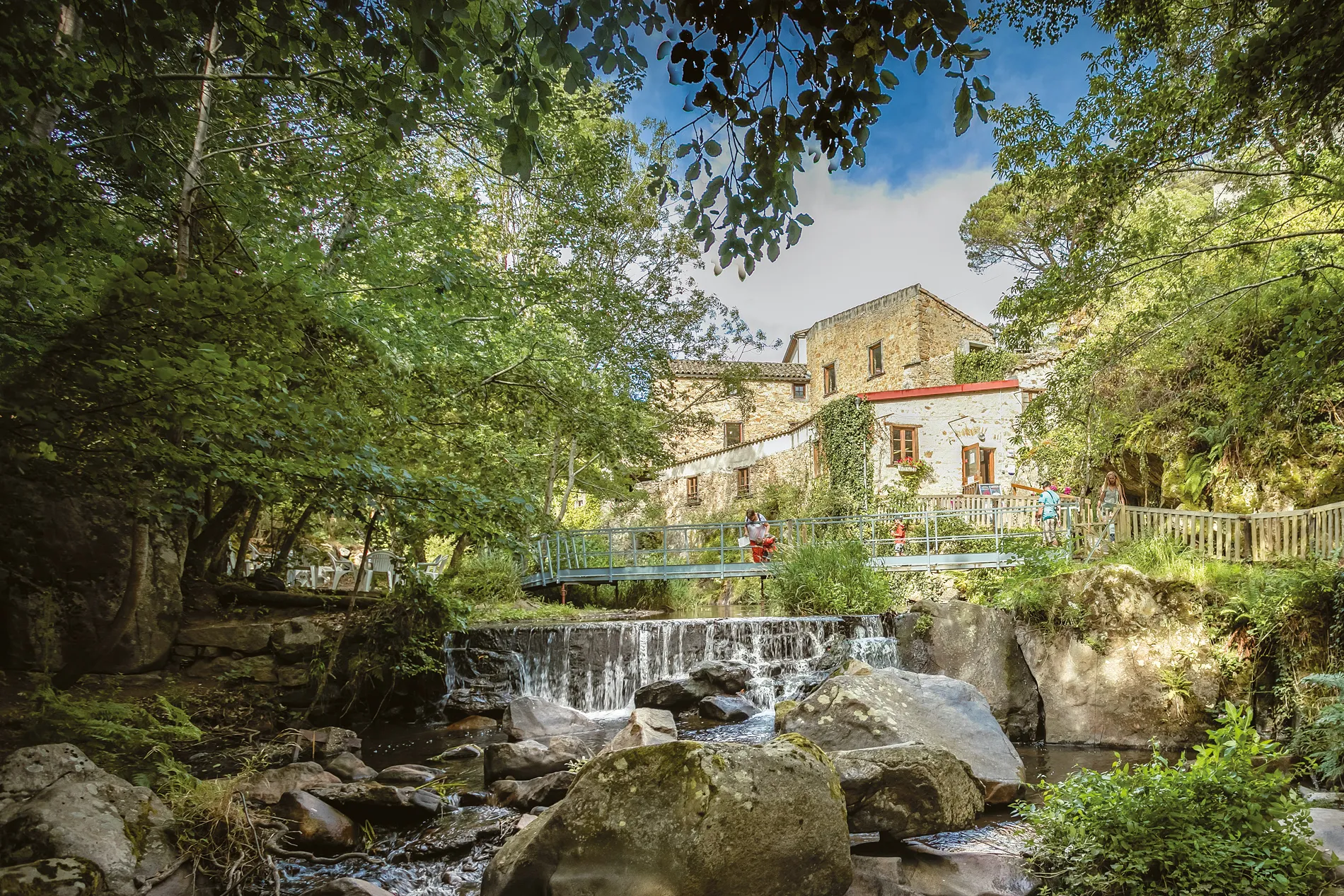
The mill, which closed in 1981 and was opened to the public in 1994, has a long tradition of craftsmen. In 1842, the department of Aude could count slightly more than 610 water mills, and on the river (la Dure) 67 workshops using water power were installed – of which about a dozen were around Brousses.

One of the pioneers of the modern paper industry, Vincent Journet was from Brousses. He installed one of the first paper machines in Europe and was the first to use wood paste mixed with rag paste on an industrial scale.

Les vitrines – the showcases

The Wasps'Nest – wasps were the first paper makers in the world.

In the second century the Chinese used the bark of mulberry branches to make paper

(see the copy of the engraving).

Writing materials – Papyrus (from Egypt) - Parchment (made from animal skins)

Paper – made exclusively from refined plant fibres

All plants consist of a skeleton which is called cellulose and of flesh (lignin …). The cellulose was extracted using a chemical process – the vegetal matter was cooked in caustic soda which burned the flesh but had no effect on the cellulose. Then the cellulose had to be bleached by oxygenation – white does not exist in nature. Chlorine was forbidden, so it had to be ozone or oxygen…

In 1841, there was a shortage of rags, and wood was not used (1846). M Tripot took out a patent for the production of paper using horse manure as a base (herbivorous non ruminant animals do not digest the cellulose contained in plants)

Referring to a study which was never applied (in the second half of the 19th century), the Brousses mill uses elephant manure from the Sigean Reserve to manufacture "Aude elephant manure paper"

Papier chiffon – rag paper

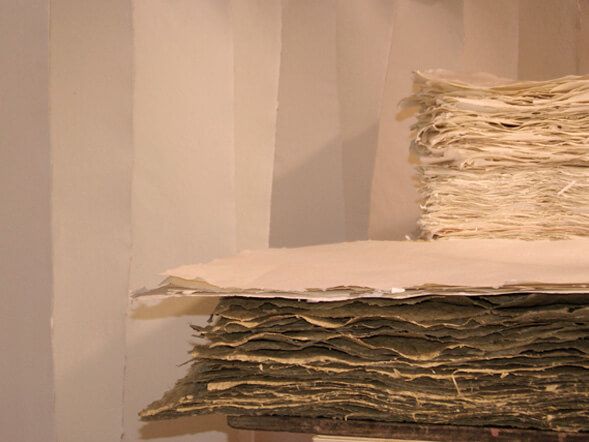
From the middle of the 8th century till half way through the 19th century paper was exclusively rag paper (linen, hemp and cotton).

The different stages are :

" Délissoir " the rags are sorted out by variety, colour and especially by the amount of wear and tear. The stitching and hems are undone and the buttons cut off.

" Pourrissoir " the rags are soaked and piled up – there is a fermentation period of two to three months.

" Dérompoir " – young workers cut up the rags using vertical blades.

La Pile à maillets – the pounding / shredding machine using mallets

This consists of three tanks, each one containing three to five pointed metal mallets which manipulate the rags. On passing from one tank to another, the rags have the fibres removed, are refined and reduced to a paste. This process takes from one to three days for 7 kg of paste in each tank. This machine replaces the poles and mallets with which Asian people made paste by hand.

Les piles hollandaises – the Dutch pounding / shredding machines

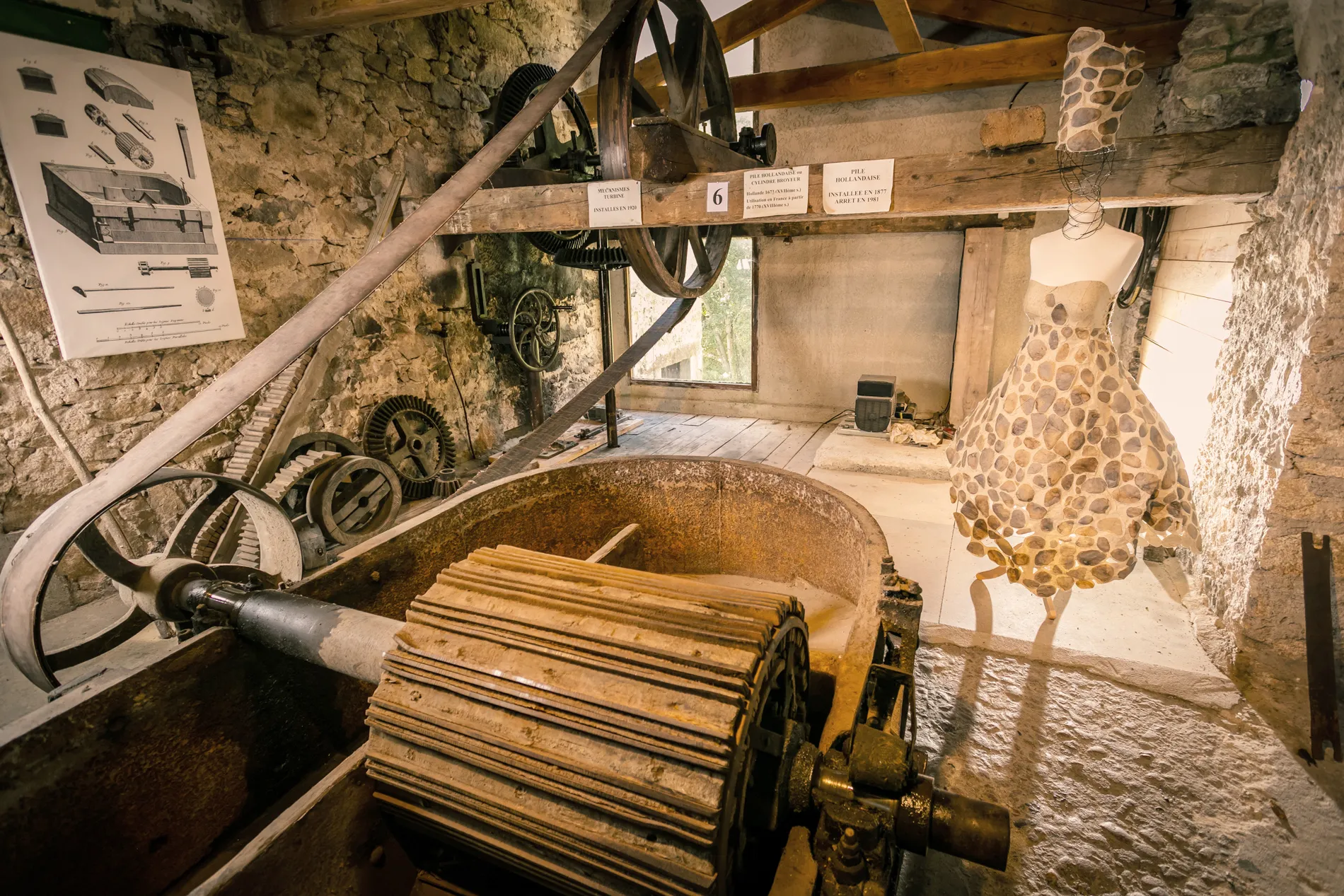
In the second half of the 17th century, the Dutch invented the cylindrical pounder called the Dutch pounding machine. It consists of a water filled tank inside which is a revolving wooden cylinder fitted with metal blades. These blades rub against other blades fixed in the base of the tank. The refining is carried out by passing the fibres between these blades for three or four hours.

The Brousses Mill owns four of these Dutch machines, two of which were installed in 1877.

Le meuleton – three millstones

Installed at the start of the fifties, the fibres are crushed between upper stones of 3.5 tons and the lower millstone of 4 tons. The result is a rather dry paste which is then plunged into the water filled Dutch machine to saturate the fibres.

La cuve à ouvrer – the open tank

The paste which comes out of the Dutch machine (40 kg of dry paste for 1000 litres of water) is diluted in a vast volume of water (99 % water).

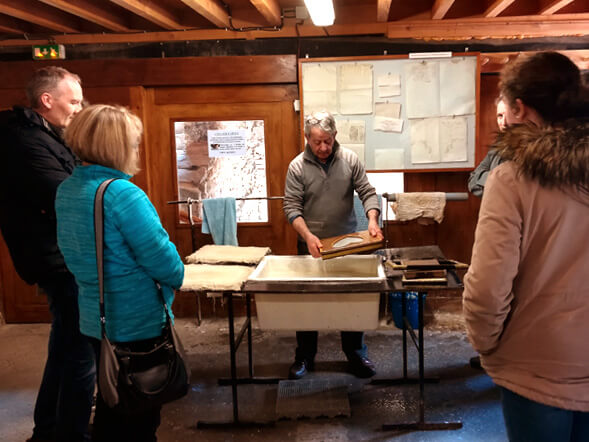
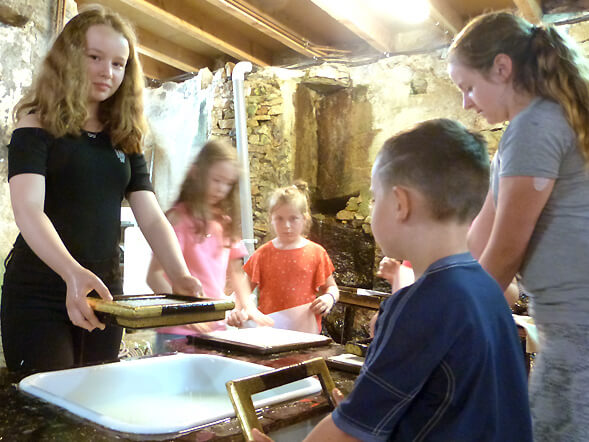
Using formes – framed metal sieves (stainers) – the paste is scooped from the water and drained.

Formes vergé – sieves for producing vergé – laid paper. Formerly all hand made paper was made this way – the weft is seen by holding the paper up to the light.

Formes vélin – sieves for producing vélin – vellum / wove paper. Smooth metal sieve to produce paper with no visible weft.

Le filigrane – the watermark : this is made of brass wire, with the logo representing the format of the paper (bell, grape,…) and is the trademark of the paper manufacturer.

After being drained, the sheet of paper is laid on woollen felt, with more felt placed between each sheet.

Then, by pressage - pressing – the maximum amount of water is extracted.

Le séchoir – the drying process

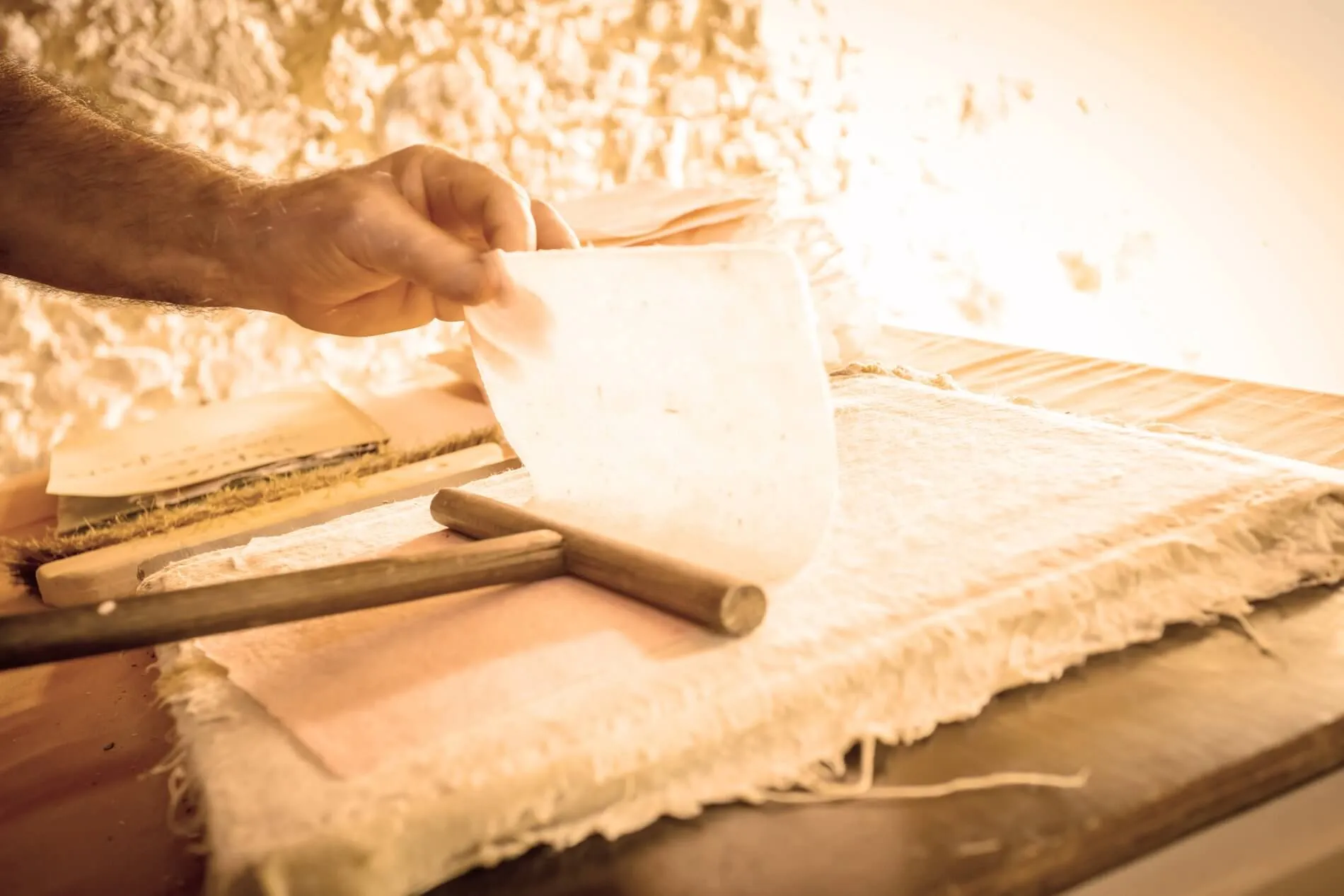
In Asia the sheets are lifted up using sticks, while in Europe T shapes are used. In Asia drying is done on boards or vertical walls, while in Europe it is done on drying lines. The drying time depends on the season and the thickness of the sheet.

L'encollage – the pasting process

All papers are porous and have to be waterproofed in order to be used for writing, painting etc… After drying, the saleran – paper trade workers – made an animal based gelatine in which the sheets were soaked before being dried a second time. Nowadays, there are no mills using this process. All the mills prepaste the fibres in the pile à maillets or in the pile hollandaise by adding a natural or chemical product.

Le lissoir – the smoothing process

The sheet of paper is placed on tanned sheepskins and smoothed using a polished stone (agate). La dent de loup – a burnisher – is used to smooth down resistant bumps. Next, hammers are used, before moving on to the laminoir – rolling mill – where two rollers turn, one on top of the other. Up until 1840 paper was not smooth.

Nos pâtes – our pastes

The white pastes are of plant extraction – linen, hemp, cotton, and alfa grass.

The coloured pastes are made using cotton rags (jeans …)

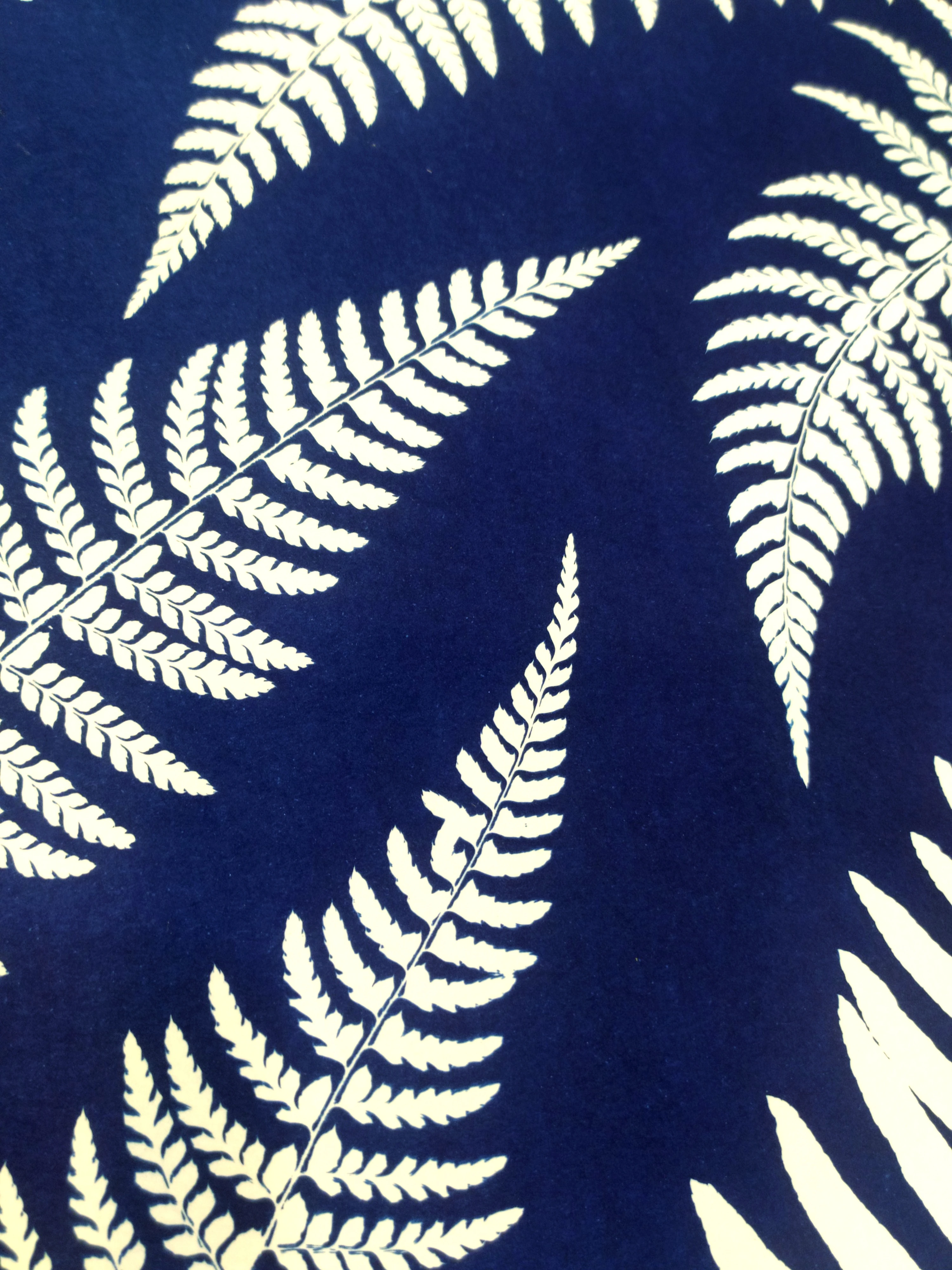
The mill uses elephant manure (droppings), la rafle de raisin – the stalks - leaves, stems etc… left over at the end of the wine making process – nettles, ferns, lavenders,…

En conclusion – in conclusion

Paper can be made with all plants regardless of their state. The paper industry uses wood and recycled paper.

Rags paper (linen, hemp, cotton) only represents 0.5 % of the production. Machines currently in use produce more than 2000 metres of paper – 15 metres wide - every minute. Paper is an amalgam of long fibres (from conifer trees) and short fibres (from broad leaved trees). The quality of the paper depends on this mixture. The paper industry adds minerals such as talc and kaolin – China clay – to ensure a better surface for printing and for opaqueness…